


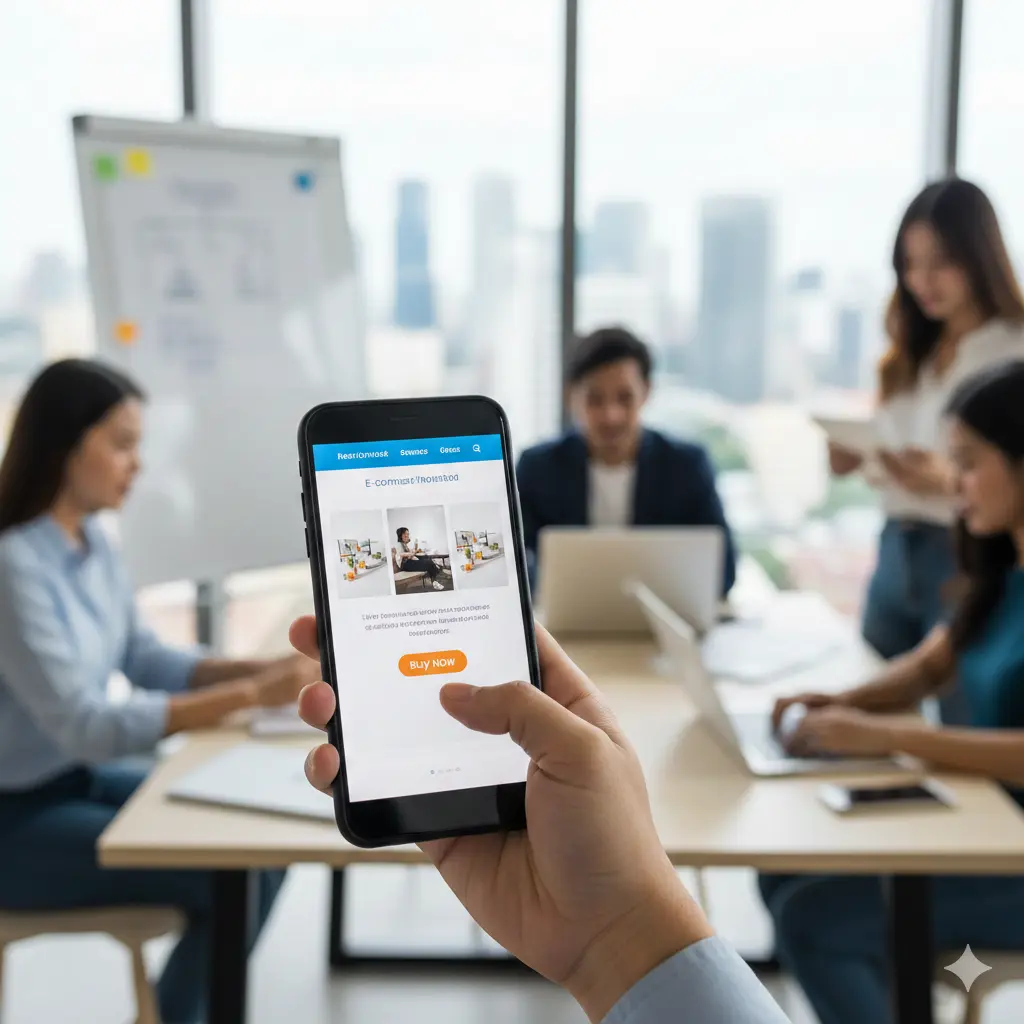
In 2026, a business without a mobile-optimized website isn’t just “behind the times”—it’s essentially invisible.
In the Philippines, where smartphone ownership has reached a staggering 98.6%, the mobile phone is no longer a second screen; it is the primary gateway to the digital economy. For small businesses (MSMEs), the shift to a mobile-first design is no longer a luxury—it is a survival requirement.
Here is why your small business must adapt to a mobile-first website design to thrive in the current Filipino market.
Table of Contents
1. The Numbers Don’t Lie: A Mobile-Only Nation
As of early 2026, the Philippines has over 98 million internet users. What’s more telling is that the vast majority of these users access the web exclusively or primarily through mobile devices.
Social Commerce: With platforms like TikTok, Facebook, and Instagram dominating the local landscape, your customers are discovering products while scrolling on their phones.
Digital Wallets: The rise of GCash and Maya has made mobile checkout the preferred way to pay. If your website makes it hard to pay via mobile, you’re losing 39% of your potential transactions.
2. Google’s “Mobile-First” Rule
If you want to be found on Google, your desktop site doesn’t matter as much as you think. Google now uses Mobile-First Indexing. This means Google primarily looks at the mobile version of your website to decide where you rank in search results.
The Reality: Even if a customer searches for your business on a laptop, Google uses your mobile site’s performance to determine if you’re worthy of the first page. If your site is slow or hard to navigate on a phone, your rankings will tank.
3. Speed is the New Currency
Filipino mobile users are often dealing with variable data speeds, especially in provincial areas. A mobile-first design isn’t just a “shrunken” version of a desktop site; it is a lightweight, high-performance version built for speed.
The 3-Second Rule: Over 50% of users will abandon a site if it takes longer than 3 seconds to load.
Data Efficiency: Mobile-first sites use optimized images and cleaner code, saving your customers’ precious data and keeping them on your page longer.
4. Better Conversion Rates for MSMEs
For a small business, every lead counts. Mobile-first design focuses on “Thumb-Friendly” navigation.
| Feature | Why it Matters for Small Businesses |
| Large Buttons | Easy for customers to “Book Now” or “Buy” without zooming in. |
| Simplified Menus | Helps users find your “Contact Us” or “Store Location” instantly. |
| Click-to-Call | Allows mobile users to call your business with a single tap. |
How to Tell if Your Website is Mobile-First
Open your site on your phone: Do you have to “pinch and zoom” to read text?
Check your buttons: Are they too close together for a thumb to tap accurately?
Test the speed: Does it load in under 3 seconds on a 4G/LTE connection?
Conclusion
The Philippine digital economy is projected to hit ₱1 trillion by the end of this year. Small businesses that embrace mobile-first design are positioning themselves to grab a piece of that pie, while those clinging to desktop-only layouts are being left behind.
Ready to modernize your online presence?